




Austria’s Luxury Real Estate Position in Europe: Key Market Insights for 2026

Austria’s luxury real estate sector entered 2026 with renewed confidence, supported by stabilising interest rates, a rebound in international capital flows, and some of the tightest prime‑market supply conditions in Europe. With Vienna repeatedly ranked among the world’s most liveable cities and Alpine–lakefront regions constrained by strict zoning and limited new construction, Austria has emerged as one of the continent’s most resilient high‑end property markets. While neighbouring countries face political uncertainty, regulatory pressure, or post‑boom corrections, Austria offers a rare combination of predictability, structural scarcity, and long‑term value preservation.
Most European countries offer one or two dominant luxury narratives. France is split between Paris and the Côte d’Azur; Switzerland is defined by its Alpine enclaves; Italy by its historic urban centres. Austria is unusual in that it combines all three within a compact, highly accessible territory. Vienna anchors the market with one of Europe’s most stable and culturally significant capitals. The Tyrolean Alps, led by Kitzbühel and Lech, form a tightly supplied resort segment with global demand. Salzburg adds a UNESCO‑protected historic core with near‑zero development capacity — a rare triad in the European luxury landscape.
This article examines the key trends defining Austria’s luxury real estate landscape in 2026, exploring how demand is evolving across buyer segments, why Vienna, the Alpine resorts, and Salzburg are tightening simultaneously, and how design, regulation, sustainability, and capital flows are influencing pricing and supply. By analysing these dynamics together, the article provides a clear view of where the market is heading and what investors, developers, and high‑net‑worth buyers should expect in the years ahead.
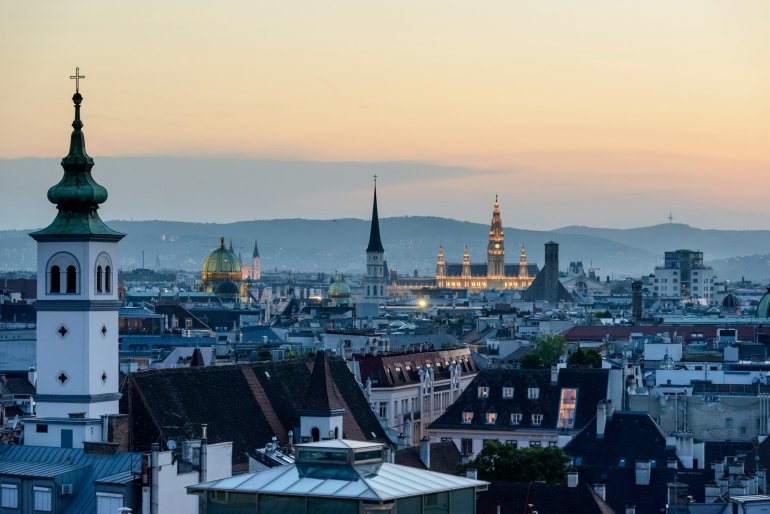
Table of Contents
- Austria’s Position in Europe’s High-End Property Landscape
- Why 2026 Marks a Structural Shift
- Macro Forces Shaping the Market
- Demand Drivers: Who Is Buying and Why
- Geographic Hotspots Redefining the Luxury Market
- Investment Trends in Luxury Property Market: Where Capital Is Flowing
- Who Buys Luxury Properties in Austria
Austria’s Position in Europe’s High-End Property Landscape
Austria has quietly evolved into a continental safe haven for ultra‑high‑net‑worth buyers. Vienna consistently ranks among Europe’s most liveable capitals, according to EIU’s Global Liveability Index, while Alpine destinations such as Kitzbühel, Lech, and Zell am See command global attention for their exclusivity and year‑round appeal. Unlike markets driven by rapid speculation, Austria’s luxury segment is characterised by limited supply, heritage architecture, and stringent development controls, factors naturally elevating both prestige and price stability.
This combination places Austria in a unique competitive position:
- More stable than Southern Europe’s lifestyle markets
- More discreet than Switzerland’s hyper‑regulated enclaves
- More culturally magnetic than many Northern European capitals
In 2026, this positioning becomes even more pronounced.
Why 2026 Marks a Structural Shift
Three forces converge to reshape the high‑end market this year:
- Capital flows are shifting toward politically neutral, low‑volatility jurisdictions. Austria benefits directly from investors reallocating assets away from markets affected by regulatory unpredictability or geopolitical tension.
- Geopolitical stability has become a premium asset. Austria’s neutrality, strong institutions, and EU membership make it a strategic base for global families seeking both security and mobility.
- Ultra‑wealth migration is accelerating. Buyers from Germany, Switzerland, CEE, and the Middle East increasingly view Austria as a long‑term residence hub rather than a secondary home market.
Together, these dynamics signal not a cyclical upswing but a structural revaluation of Austrian luxury property.
Macro Forces Shaping the Market
Austria’s luxury real estate market is operating in a macro environment that is more stable than in 2022–2023, but still shaped by elevated inflation and geopolitical risk. According to the latest Bank Austria prognosis, the ongoing conflict in the Middle East is keeping energy prices higher for longer, with oil around USD 100 per barrel and gas around EUR 60 per MWh expected to ease only from the third quarter of 2026 and not return to early‑year levels by year‑end. This has already pushed Austrian inflation back to just over 3% in March, with rates of around 3.5% expected in the second half of the year. Bank Austria has therefore raised its inflation forecast for 2026 from 1.9% to 2.5% and for 2027 from 2.2% to 2.6%, still below the previous year’s 3.6% but clearly higher than previously assumed. For investors, this means a slower and more fragile disinflation path, but also a continued search for real assets with scarcity and pricing power—a context in which prime Austrian property retains its appeal as a long‑term value store.
Demand Drivers: Who Is Buying and Why
Austria’s luxury real estate market in 2026 is being reshaped by a convergence of international capital, expanding domestic wealth, and lifestyle‑driven migration patterns. Despite a broader residential correction, the high‑end segment remains resilient due to tight supply, stable political conditions, and sustained international demand.
International UHNW Buyers Seeking Stability, Privacy, and EU Footholds
International demand remains one of the strongest forces in Austria’s luxury segment. The 2026 luxury market report highlights that sustained international demand is a key reason the high‑end sector continues to grow despite macroeconomic pressures .
CBRE’s 2026 outlook confirms that international buyers have returned to Austria’s investment market, contributing to renewed transaction activity and tightening conditions in prime residential areas.
This aligns with the broader trend of UHNW families seeking:
- Political neutrality and institutional stability
- Discreet wealth environments
- EU footholds with strong residency pathways
These buyers are particularly active in Vienna’s prime districts and Alpine trophy markets.
Domestic Wealth Expansion: Family Offices, Tech Founders, Mittelstand Successors
Domestic demand is strengthening as Austria exits a two‑year recession and purchasing power stabilises. According to the Global Property Guide’s 2026 analysis, the market is "entering a mild nominal recovery, supported by lower financing costs and stabilising household purchasing power against the background of persistent supply tightness."
ÖRAG’s 2025 market data further shows that equity‑rich investors such as family offices and pension funds remain highly active, even as financing conditions remain challenging for others.
This domestic cohort includes:
- Family business dynasties
- Second‑generation Mittelstand successors
- Tech founders emerging from Vienna and Graz
- Institutional and semi‑institutional private investors
Their activity anchors the luxury market and absorbs premium stock even when international flows fluctuate.
Lifestyle Migration: Climate Resilience, Alpine Wellness, and Vienna’s Cultural Capital
Lifestyle‑driven migration is another structural demand driver. Austria’s luxury market is described as a “discreet haven” with a high standard of living, strong environmental quality, and cultural depth — factors that continue to attract affluent lifestyle buyers from across Europe.
Key motivations include:
- Climate resilience and clean‑air Alpine environments
- Year‑round wellness and outdoor recreation
- Vienna’s global reputation for culture, safety, and liveability
This group is particularly active in Salzburg, Tyrol, and lake regions such as Wörthersee and Salzkammergut.
Rise of Dual‑Home Strategies (Vienna + Alpine Retreat)
According to Jeroen van der Werff "Austria has topped the lists for years as a favourite country for a second home." This rising trend of dual‑home ownership is built on the premise that UHNW families maintain a primary residence in Vienna, and a secondary chalet or retreat in Tyrol or Salzburg.
This pattern is supported by the 2026 luxury market mapping, which shows simultaneous tightening across Vienna, the Alps, and the lakes, each driven by its own scarcity dynamics.
The Alpine segment is especially constrained due to:
- Strict second‑home regulations
- Limited new construction
- High demand for multi‑million‑euro chalets
This dual‑market pressure is one of the reasons Austria’s luxury segment remains structurally tight.
Geographic Hotspots Redefining the Luxury Market
Austria’s luxury real estate landscape in 2026 is defined by a set of highly concentrated geographic hotspots where scarcity, heritage value, and international demand intersect. These markets behave differently from the broader residential sector, with price resilience driven by limited supply and sustained UHNW interest.
Vienna’s Premium Districts (1st, 13th, 19th)
Vienna’s prime districts remain the epicentre of Austria’s luxury market, with palatial apartments, embassy zones, and heritage buildings dominating the top end. Austria’s luxury real estate landscape in 2026 is defined by a set of highly concentrated geographic hotspots where scarcity, heritage value, and international demand intersect. These markets behave differently from the broader residential sector, with price resilience driven by limited supply and sustained UHNW interest.
Vienna’s prime districts remain the epicentre of Austria’s luxury market, with palatial apartments, embassy zones, and heritage buildings dominating the top end.
The 1st District (Innere Stadt) continues to command some of the highest prices in the country, with exclusive penthouses and palais‑level residences regularly listed above €6–7 million.
The 13th District (Hietzing) and 19th District (Döbling) offer villas, historic estates, and green‑belt luxury living, with properties in Döbling reaching €6–7 million and above, according to Knight Frank.
Sotheby’s International Realty listings confirm sustained demand for high‑end apartments and villas across these districts, including multiple properties above €6 million in the 1st and 19th districts.
These districts are defined by heritage architecture, diplomatic presence, and extremely limited new supply, making them structurally extremely resilient.
Emerging Micro‑Markets: Graz and Salzburg
Beyond Vienna, several emerging markets are gaining attention:
Graz, possessing two UNESCO titles, is a high-end market with true historic luxury properties such as splendid villas with park-like gardens, luxurious condominiums, or even fairytale-like castles, according to Engel & Völkers.
Salzburg, being also a UNESCO World Heritage city, continues to strengthen its luxury profile with heritage‑protected, heavily driven by its affluent international tourist base, rich cultural heritage, and prestige. UHNW clients can also enjoy the famous shopping districts: Getreidegasse and Alter Markt squares, serving as the city's high-street luxury hubs with stores for top-tier international luxury houses including Hermès, Prada, Louis Vuitton, and Moncler.
These markets are defined by strict zoning, environmental protections, and near‑zero new development, which naturally drives long‑term price appreciation.
Lake Regions: Attersee, Wörthersee, Wolfgangsee
Austria’s lake regions are experiencing scarcity‑driven price escalation, with ultra‑limited waterfront availability.
Wörthersee, Attersee and Wolfgangsee properties are frequently marketed as one‑of‑a‑kind assets, with lakefront estates rarely entering the open market. Premium lakefront listings from Sotheby’s and Engel & Völkers show consistent multi‑million‑euro valuations for properties with direct water access, some uniquely luxurious manors reaching even €44M.
Alpine Luxury: Kitzbühel, Lech, Zell am See
Austria’s Alpine regions remain among the most coveted resort markets in Europe, driven by global UHNW demand for trophy chalets and branded residences.
Kitzbühel and Lech are consistently cited as Austria’s most exclusive Alpine destinations, with chalet prices reflecting extreme scarcity and international competition.
Kitzbühel as a property market operates in its own rarefied league. Most residences are held by high‑net‑worth owners, and the apartments themselves have become a symbol of Alpine prestige. Chalet‑style units with direct lift access to the slopes and a private wellness floor typically command €5–7 million, while standout properties can reach €12 million. In this market, apartments rival villas in value, and the extremely limited supply keeps the entire area firmly in the realm of the ultra‑exclusive, according to Vienna Property.
Lech am Arlberg is recognised worldwide as one of the most exclusive and expensive luxury property markets, an Alpine enclave often compared to Aspen for its prestige and ultra‑high‑net‑worth clientele. Favoured by European royalty and the global elite, Lech commands exceptional real estate values, with luxury chalets and apartments averaging €20,000–€25,000 per square metre, placing it among the priciest mountain destinations in the world. Securing a home here is exceptionally challenging, as strict local regulations tightly control development and limit property sales to ensure residences remain occupied rather than standing empty for most of the year, creating a market defined by extreme scarcity and enduring desirability.
Zell am See / Bruckberg embodies the essence of Alpine tranquility, being "a gateway to a sophisticated alpine lifestyle." Residents enjoy immediate access to golf courses, private ski clubs, bespoke wellness programmes, and a cultural calendar rich with concerts, art events, gourmet restaurants, and designer boutiques. The property market reflects this exclusivity: luxury residences typically range from €1.5–3 million, with standout chalets and panoramic lake‑view apartments commanding even higher premiums due to limited availability.
Investment Trends in Luxury Property Market: Where Capital Is Flowing
The landscape of luxury real estate has shifted from purely speculative growth toward a strategy of institutional-grade stability. In 2026, global capital is increasingly concentrating in markets that offer "structural scarcity"—locations like Vienna’s Innere Stadt or the Kitzbühel Alps, where strict zoning and heritage protections create an artificial ceiling on supply. Investors are no longer just buying square footage; they are acquiring "trophy safe havens" that act as a hedge against currency devaluations and geopolitical instability in other regions. This has led to a decoupling of the luxury tier from the broader residential market, with ultra-high-net-worth individuals prioritizing capital preservation over immediate rental yields.
A significant portion of this capital is currently flowing into "climate-resilient luxury" and wellness-centric estates. Properties located near Alpine lakes or at higher altitudes are seeing a surge in demand as investors hedge against rising temperatures in Southern Europe. This trend has transformed the traditional "holiday home" into a primary or secondary residence equipped with "longevity" infrastructure—private medical suites, professional-grade home offices, and advanced air filtration systems. In these niche segments, the buyer profile has shifted toward the "global executive" who requires a highly secure, technologically seamless environment that functions as a year-round hub rather than a seasonal retreat.
Furthermore, there is a visible move toward asset diversification within the luxury sector, specifically targeting branded residences and lakeside villas. These assets offer the prestige and management standards of five-star hotel brands, providing a layer of liquidity and professional oversight that traditional standalone properties lack. This is reflected in the Key Luxury Metrics for Q2 2026: in Vienna’s 1st District, prices range from €15,000 to €30,000/m² with a 5% growth forecast driven by international demand. Kitzbühel and Tyrol maintain steady growth of 3-4% with prices between €10,000 and €22,000/m². According to Engel & Völkers, houses were sold in 2024 for an average of around 2.7 million euros, but unique properties can also be traded for top prices of up to 35.5 million euros or more.
Lakeside Villas have become the highest performers with a 6% growth forecast and valuations often reaching €15M+. Ultimately, the market is seeing a "flight to quality," where the most elite assets continue to appreciate despite global headwinds, driven by a buyer class that views these properties as essential anchors for their portfolios.
Back to topWho Buys Luxury Properties in Austria
In 2026, the Austrian luxury property market is defined by a high concentration of wealth in a relatively small number of hands, with the total real estate market around €28 billion to €30 billion in annual transactions.
In Austria’s high‑end residential market, around 60% of buyers are domestic, while the remaining 40% come from a diverse international pool. The strongest foreign demand originates from Germany, Switzerland, the United States, Eastern Europe (Russia, Ukraine, the Czech Republic, and Slovakia), the Middle East, and Asia (notably Hong Kong, mainland China, and the UAE). This mix reflects Austria’s position as a stable, centrally located safe‑haven market.
Vienna’s super‑prime segment, concentrated in the Innere Stadt, attracts a distinctly global clientele. Swiss buyers, American investors, Gulf families, and affluent Asian households dominate transactions at the very top end, where heritage buildings, protected façades, and limited supply create enduring scarcity.
In Salzburg’s prime market, foreign demand is led by German and Swiss buyers, who account for roughly 40% of high‑value purchases. Budgets frequently exceed one million euros, particularly for luxury apartments in the historic centre or family homes in premium districts.
In the Alpine regions, Kitzbühel functions much like Switzerland’s elite resorts — St. Moritz, Zermatt, or Davos. It attracts a global, ultra‑affluent clientele with multi‑million‑euro budgets and a strong preference for politically stable, low‑volatility environments. During periods of economic or geopolitical turbulence, Kitzbühel consistently behaves as a safe‑haven destination, reinforcing its status as one of the most resilient resort markets in Europe.
Conclusion: Austria’s Luxury Market as a Long‑Term Value Play
Austria’s luxury real estate market stands out in Europe because it combines stability, cultural depth, and extraordinary natural assets in a way few countries can match. Its political neutrality, world‑class liveability, and tightly protected landscapes create a market where value is preserved through scarcity, not speculation. This is why Austria continues to attract long‑horizon investors, UHNW families, and institutional capital seeking resilience rather than volatility.
As 2026 unfolds, Austria is positioned as a top‑tier European luxury hub, with Vienna’s heritage districts, the Alpine resorts, and the lake regions forming a triad of ultra‑prime markets. Each segment is defined by extremely limited supply, high global demand, and structural constraints that support long‑term price stability. The country’s ability to offer both urban cultural capital and Alpine‑lakefront exclusivity gives it an immense competitive advantage.
For investors, developers, and UHNW buyers, the strategic takeaway is clear: the Austrian luxury real estate market is not based on a temporary, but on a long‑term value play. The most resilient opportunities lie in heritage assets, scarcity‑driven micro‑locations, and ESG‑aligned premium developments that meet the expectations of global capital. In a world defined by uncertainty, Austria’s luxury segment offers something increasingly rare: durable value anchored in uniqueness, stability, and culture.
Back to top


Comments